01 · Freight & logistics · Multi-tenant SaaS
FreightOps
Product architecture, UX, and full-stack development
A multi-tenant freight operations platform for dispatch, driver workflows, compliance, chat, billing, and payout management.
16
Documented surfaces, load to payout
4
Access tiers, admin to driver
LIVE
Shipping at freightops.app
- Product TypeMulti-tenant logistics SaaS
- RoleProduct Architecture, UX, and Full-stack Development
- FocusDispatch, compliance, finance, and multilingual team workflows
FreightOps
Production-grade operations software for trucking companies that need dispatch control, driver execution, compliance review, communication, billing, and payouts in one system.
Website: www.freightops.app
Project Overview
FreightOps is a full-scale freight operations platform built around the actual lifecycle of a load, not a narrow slice of the business. It covers load creation, assignment, driver actions, trip progress, document collection, review, and payout readiness inside a single product experience.
The product is designed for multiple user roles working in the same operating environment. Dispatchers, company managers, owners, platform admins, and drivers each have role-specific workflows while still sharing the same operational context. That makes the platform useful for day-to-day execution instead of becoming another disconnected admin tool.
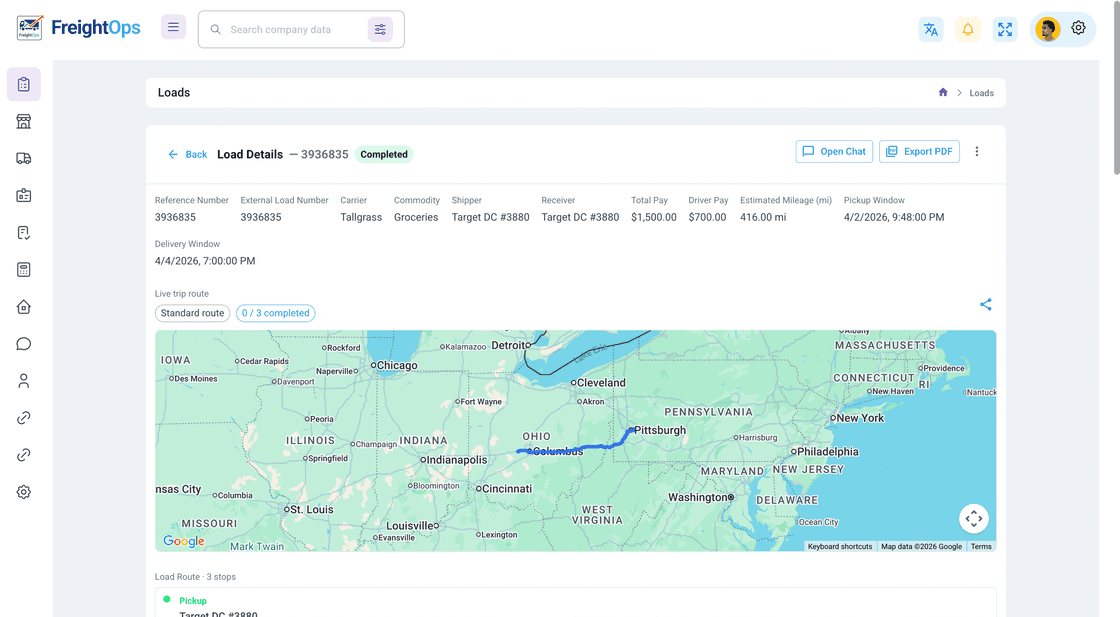
FreightOps load management dashboardCore Workflow Coverage
FreightOps supports the full path from planning to payment:
- Create and manage loads with structured operational detail
- Assign drivers and equipment to active work
- Let drivers review, accept, and execute assigned trips
- Collect receipts, documents, and proof-of-delivery assets
- Review submitted evidence before moving work into financial processing
- Track completed jobs into payout readiness and driver payment workflows
One of the strongest parts of the product is that the workflow does not stop when a load is assigned. The system continues through execution, accountability, review, and downstream financial actions, which is where a lot of logistics software starts to break apart.
Load Intake and Dispatch
Load creation starts with structured intake and a dispatch-focused workspace instead of a generic form. That keeps the operational data consistent from the moment work enters the platform and makes it easier to move from planning into assignment without losing detail.
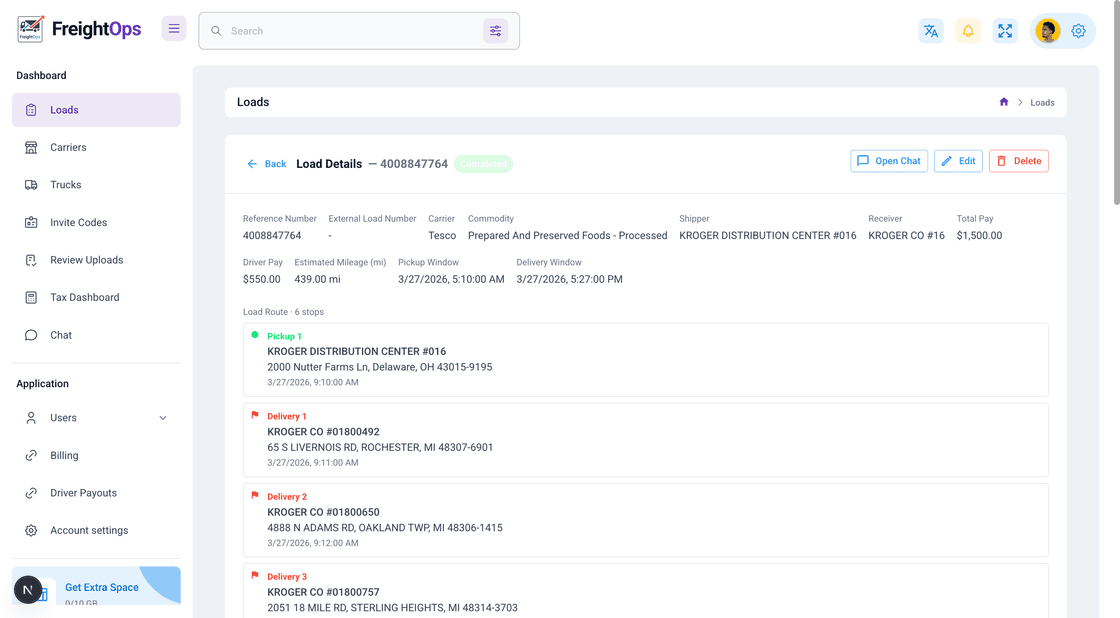 Load detail review
Driver Workflow and Execution
Driver execution is treated as a first-class workflow. Managers can assign work, review driver readiness, and track past activity, while drivers can move through trip-related actions inside the same operational system.
Operations, Finance, and Communication
The platform combines operations tooling with the financial systems that trucking companies actually need to run the business.
On the company side, FreightOps supports subscriptions, invoicing visibility, discounts, billing administration, and payout review. On the driver side, it handles payout readiness, payout requests, and the connection between verified trip completion and payment flow. Stripe and Stripe Connect integration make the platform work both as a SaaS product and as a money-movement system.
The communication layer is equally important. FreightOps includes real-time chat with media support, operational context, and automatic translation for multilingual teams. That matters in trucking operations where dispatchers, managers, and drivers need to stay aligned while work is in motion, even when teams do not share the same primary language.
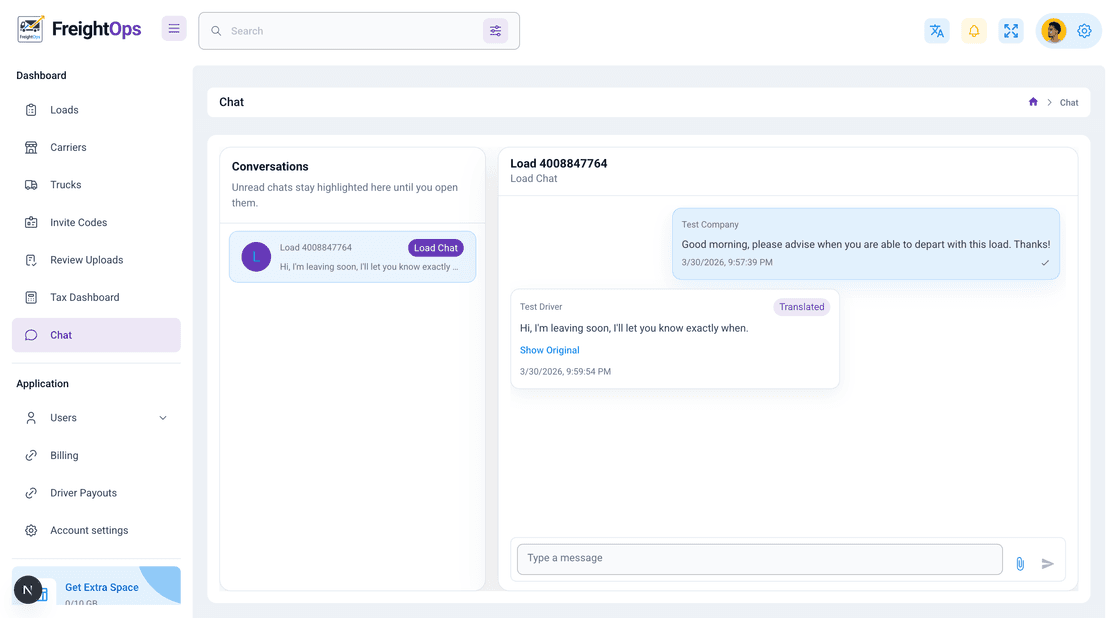 Multilingual operational chat
Compliance and AI-Assisted Intake
Receipts, trip documents, proof-of-work files, and other uploads move through structured review flows instead of being treated like loose attachments. The platform includes AI-assisted document processing to turn uploaded material into more usable operational data, reducing manual review overhead and speeding up compliance-oriented workflows.
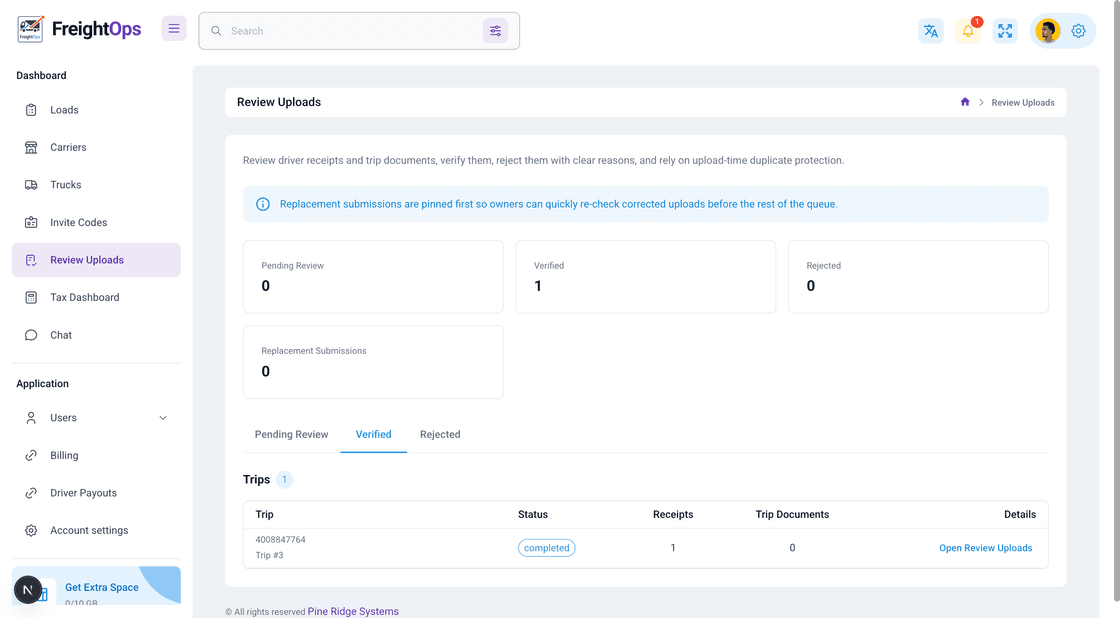 Document review workflow
This is practical AI, not decorative AI. The value is in making document-heavy operations faster, more consistent, and easier to audit.
Architecture and Delivery
FreightOps demonstrates the architecture needed for real business software:
- Multi-tenant company scoping
- Role-based access across platform admins, company owners, admins, and drivers
- Protected APIs and permission-aware middleware
- Subscription-aware access control
- Background processing for notifications and other asynchronous work
- Redis-backed infrastructure for responsive system behavior
Administrative and operational support tools also matter here. The platform includes account-level file controls, invite-code based onboarding flows, and fleet record management so support and configuration work stay inside the same product environment.
The frontend also reflects the product depth. Different roles see different navigation structures, priorities, and operational tasks depending on what they are responsible for. That balance of backend complexity, role-based UX, payments, compliance, and real-time collaboration makes FreightOps a strong example of complex business-critical application design.
Outcome
FreightOps shows the ability to build software around an end-to-end operating model instead of isolated screens. It brings together logistics workflows, financial handling, multilingual communication, document review, and tenant-aware access control into a single product that feels built for actual trucking operations.
Hi there! Want to support my work?
Let’s Build Something Great
Get in touch to discuss your project — whether it’s a web app, custom API, or performance tuning. I’ll help you go from idea to deploy with clean, scalable code.